
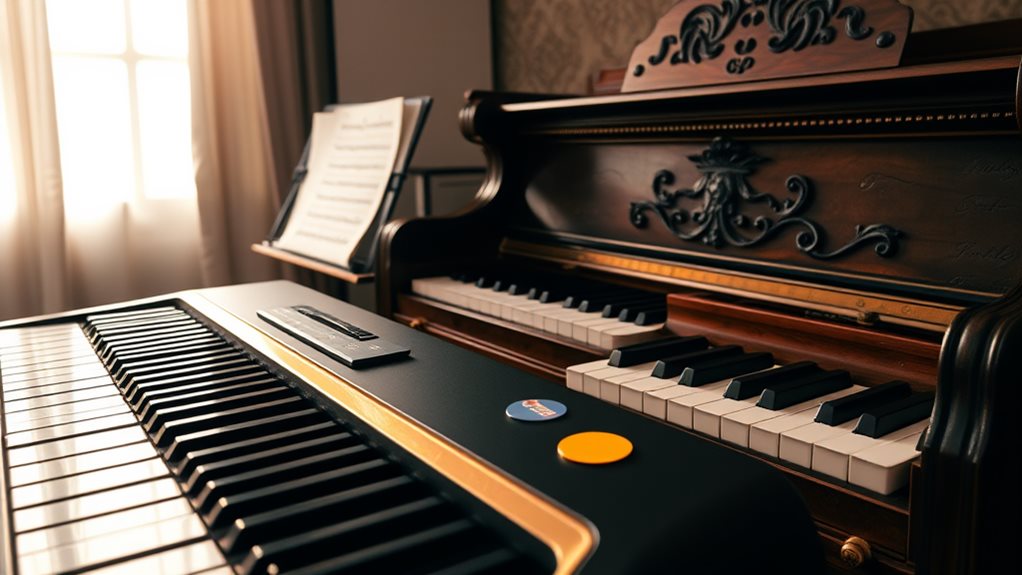
When choosing between a keyboard and a piano, consider your musical style and goals. Keyboards provide versatility with various sounds and effects, making them perfect for genres like rock or electronic music. They're portable and budget-friendly, ideal for beginners. In contrast, pianos deliver a rich, authentic sound and are best for developing classical skills. If you aim for serious study, a piano might be your best bet. Ultimately, your choice hinges on how you want to play and where you're headed musically. Stick around to uncover more insights tailored to your preferences and aspirations.
Functionality Comparison
When weighing the functionality of a keyboard versus a piano, it's essential to consider how each instrument aligns with your musical goals. Key features play a significant role in this comparison. A keyboard often comes with various voices, rhythms, and built-in effects, allowing you to explore different sounds and styles. If you're aiming for versatility in genres like pop, rock, or electronic, a keyboard can be more suitable.
On the other hand, a piano offers a more traditional approach, focusing on acoustic sound and touch sensitivity. This instrument's user interface is straightforward, emphasizing the tactile experience of playing. If your goal is to develop classical skills or explore the intricacies of music theory, a piano might better meet your needs.
Additionally, consider portability and setup. Keyboards are generally lighter and easier to move, while pianos can demand more space and commitment.
Ultimately, your choice should reflect the type of music you want to create and the environment in which you'll be playing. Analyzing these aspects will help you determine which instrument aligns best with your artistic aspirations.
Sound Quality Analysis
Sound quality plays a pivotal role in distinguishing between a keyboard and a piano, influencing your overall experience and the music you create. When you evaluate sound dynamics, pianos typically offer a more authentic auditory experience. Their strings vibrate naturally, producing a wide range of tonal richness that enhances your musical expression.
You'll notice that a grand piano, for instance, provides a depth and clarity that's hard to replicate.
In contrast, keyboards often rely on digital sampling to produce sounds. While many high-quality keyboards can emulate piano sounds effectively, they may lack the same level of nuance. The sound dynamics can feel compressed, especially in lower-end models.
If you're looking for versatility in sounds, keyboards can give you a broader palette, but you might sacrifice some tonal richness for it.
Ultimately, your choice will depend on what you prioritize in your music. If you crave the organic feel and depth of a piano, you might find it more fulfilling. If you're drawn to a variety of sounds and styles, a keyboard could suit your needs better.
Assessing these aspects will help you determine which instrument aligns with your musical aspirations.
Versatility of Instruments
Versatility is a defining characteristic that sets keyboards apart from pianos, making them appealing for various musical genres and settings. Keyboards often come equipped with a wide range of sounds and effects, allowing you to explore everything from classical to contemporary styles. This adaptability lets you experiment with different musical genres like jazz, rock, pop, and electronic music without needing multiple instruments.
In performance settings, keyboards can easily transition from intimate gatherings to large concerts. Their portability and built-in features like MIDI connectivity enable you to integrate them with other devices, enhancing your performance possibilities. You can layer sounds, add rhythms, and even create backing tracks, which pianos typically can't offer. This flexibility makes keyboards a popular choice for solo performers and bands alike.
On the other hand, pianos, while rich in tone and expression, generally excel in classical and jazz contexts. They're less suited for modern genres that demand diverse soundscapes.
Therefore, if you're looking for an instrument that can accommodate a wide array of musical styles and performance environments, a keyboard might be the better choice for you.
Choosing Based on Budget
Budget plays a crucial role in deciding between a keyboard and a piano, as the cost of these instruments can vary significantly. If you're on a tight budget, a keyboard often presents more affordable options. Entry-level keyboards can start as low as $100, making them accessible for beginners or casual players. They typically come with features like built-in sounds and rhythms, which can enhance your learning experience without breaking the bank.
On the other hand, acoustic pianos generally require a more substantial financial commitment. Even used models can cost several hundred to thousands of dollars, reflecting their quality and durability.
However, think of a piano as a long-term investment. If you're serious about your music, an acoustic piano can last for decades, providing a rich and authentic sound.
Ultimately, consider how much you're willing to spend now versus how long you plan to play. If you're looking for an instrument that offers immediate affordability and versatility, a keyboard might be the way to go.
However, if you envision a lifelong musical journey, investing in a piano could pay off in the long run.
Evaluating Skill Level and Goals
When evaluating your skill level and musical goals, it's essential to reflect on what you hope to achieve with your instrument. If you're a beginner, your preferences might lean towards a keyboard due to its versatility, portability, and often lower cost.
Keyboards typically offer various sounds and rhythms, making it easier to explore different genres without committing to advanced techniques right away.
On the other hand, if you're aiming for a more classical approach or have prior experience, a piano may be more suitable. The weighted keys and rich sound help develop finger strength and control, essential for mastering advanced techniques.
Consider whether you want to play pop songs, classical pieces, or even compose your own music.
Ultimately, your goals should guide your choice. Are you looking to play casually for fun, or do you aspire to perform at a higher level?
Understanding your current skill level will help you select an instrument that not only meets your immediate needs but also supports your growth as a musician. Reflecting on these factors ensures you choose the right instrument that aligns with your aspirations and abilities.
Conclusion
In choosing between a keyboard and a piano, consider your specific needs and preferences. If you prioritize portability and versatility, a keyboard might be the perfect fit. However, if you value authentic sound and touch, a piano could be the better choice. Assess your budget and skill level, as these factors play a significant role in your decision. Ultimately, select the instrument that aligns with your musical goals and enhances your playing experience.